
Christmas season is arriving early in Nottingham this November. Ahead of Northern Ballet’s performances of The Nutcracker, we spoke to one of the stars of the show, Rachael Gillespie, who plays Clara to tell us more about this Christmas classic.


The countdown to the world's biggest arts festival Edinburgh Festival Fringe is on and arrives this month for its 75th anniversary. Between 5 - 29 August you can enjoy a diverse selection of work from across the UK in Scotland's capital city.
Ahead of the festival, I have fantastic interviews coming up from some of the acts who will be heading there to showcase their work.
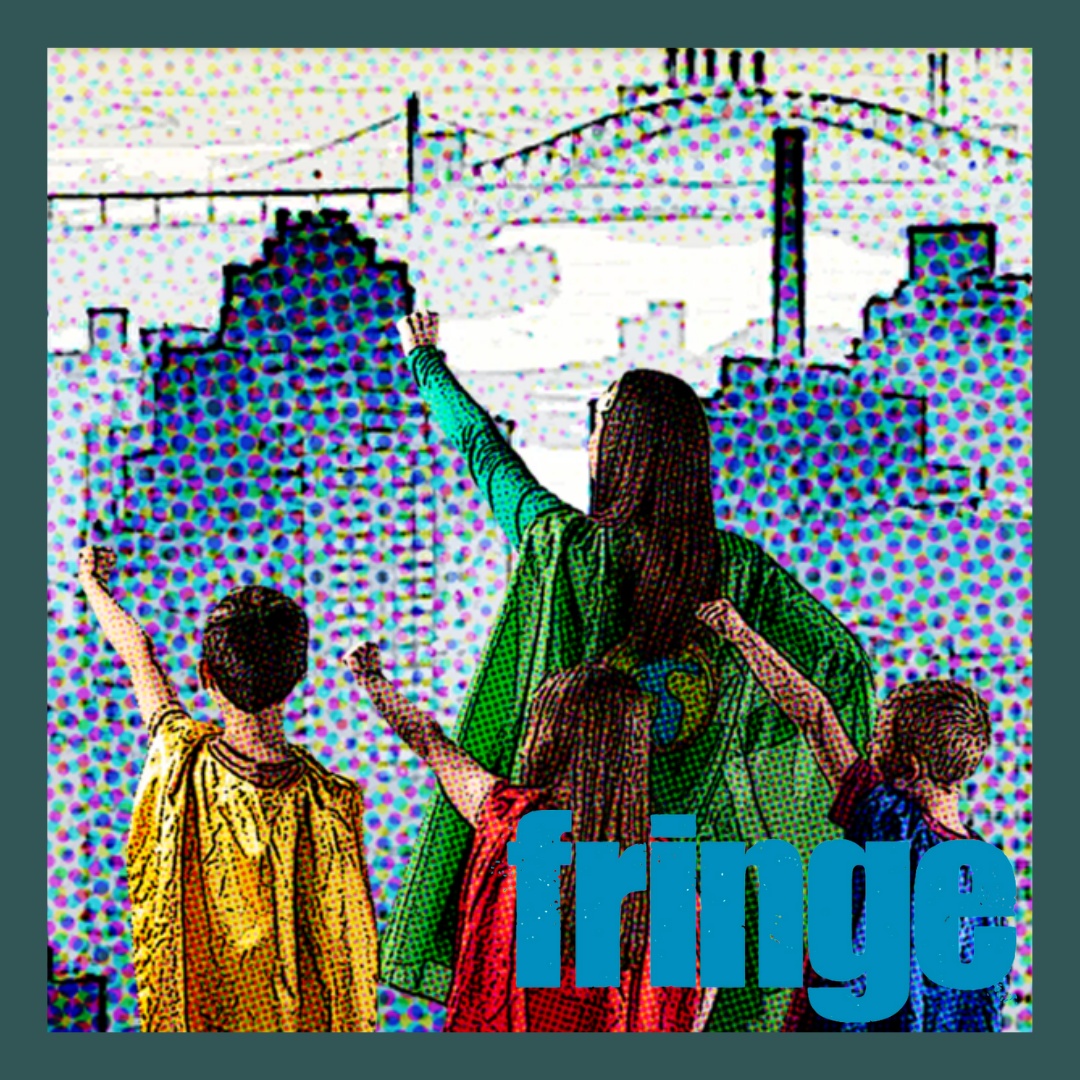
Today's interview comes from Play People Productions. They're bringing their interactive children's show about the current climate crisis, Superhero Academy: Environmental Adventure, to the Edinburgh Festival Fringe this August.
So to begin with, tell us about Play People productions and what work they do?
Play People Productions creates family and children’s theatre. We aim to create shows for all the family to enjoy! We also specialise in creating interactive engaging shows for primary-aged children with an educational message, delivered through a variety of fun and engaging performance mediums. This is what led us to create ‘Superhero Academy: Environmental Adventure!’
Superhero Academy: Environmental Adventure is an educational immersive show designed for children. What drew you to creating this work in the first place?
Children’s imagination and creativity are enhanced through play, and it’s also where their best learning takes place. This is why the children are invited to join in as soon as they walk into the theatre; they become the stars of the show! Children are encouraged to be fully immersed in our show and join the heroes at Superhero Academy to complete the ultimate mission to- save the planet!
When creating the show, I used my years of experience as a Primary School Teacher to inform the creative decisions and how we can present the educational content to have the most impact.
"What better mission to give to the children who are going to be the future of our world!"
Your show is based on global warming and sustainable living - how did you develop this work? Where did your main influences come from?
Global warming is a huge abstract concept that is difficult to understand even for grown-ups, so how can we expect children to understand the impact that global warming is having on our world if even us adults struggle with it? Our show is aiming to make it accessible and easy to understand through a fun, musical, visual show experience with puppets, songs and dances. It is an exciting and educational experience and children will be learning without even realising it.
Our show brings to life the impact that human actions are having on the planet. All of the information shared and ideas given are things that the children can use independently to do their part in helping the planet throughout the show and beyond.
What better mission to give to the children who are going to be the future of our world? It is vital that children are taught ways to help protect the environment around them and enjoy our world as in years to come children won’t protect what they didn’t know existed.
You have toured around the UK - what was that experience like and how have children received this piece of work?
It’s been wonderful to share this performance with a variety of audiences and to see all of the children’s reactions to joining in the fun of our show. We teach the children a Superhero Academy chant and it’s great to hear the children singing it as they are leaving the theatres. Parents love that children can join in with all of the show and have commented on how inspired their children have been afterwards. We’ve had messages from families to tell us how their children have taken their superhero mission home and have become eco heroes!
Is there a part of the show which you feel has the biggest impact of all?
The children always love the interactions with the puppets especially ‘Olivianna the Orangutan’ during the show she tells them about how she has nowhere to live due to deforestation. You can see the children processing this information as they listen to Olivianna’s story and they show great empathy for the character and want to help her find a new home.
There is another moment where the children are singing and dancing with Gilbert the fish and he tells them how his friends often get trapped in pieces of plastic floating in the ocean. This then inspires the children to clean up the ocean for him which they do through a bubble filled sing song!
What has been the most challenging aspect in putting this interactive show together?
Well as we mentioned we have a lot of puppets in the show and Olivianna the orangutan's demands are getting more demanding each show we do! You should see her rider!
Do you depend on the children in order for the show to flow?
The show has a set structure that interactive storytelling follows. It takes the children from cities to polar ice caps, rainforests to under the sea and along the way the puppets/characters the children meet help them to understand how the world around us is being affected by the current climate crisis. The children are able to direct the flow of the show when they are interacting with the puppets. The puppets are live-voiced for each performance which means that they too along with the performers can interact with the children. The children love chatting with the puppets/characters and asking them questions and it creates many unique moments in every show!
Why is this festival and your show important for people to see and support during August?
The Edinburgh Fringe is an incredible collection of hard work, dedication and talent-it’s a wonderful experience! Our show is important to come along and support as it will have a lasting effect on how your children view their own role in protecting our world. The activities and tasks given aim to inspire and give children ownership over the ways they can help. It’s also one of the few shows at the fringe where the children don’t have to sit down and watch for an hour and are up, running and dancing around!
What do you hope for the future with Superhero Academy: Environmental Adventure! after the fringe?
We hope to continue touring the show and sharing our Superhero message inspiring the future generations who will be left looking after our planet. So we really hope our show makes an impact on the mini superheroes who will be joining us on our mission!

The countdown to the world's biggest arts festival Edinburgh Festival Fringe is on and arrives this month for its 75th anniversary. Between 5 - 29 August you can enjoy a diverse selection of work from across the UK in Scotland's capital city.
Ahead of the festival, I have fantastic interviews coming up from some of the acts who will be heading there to showcase their work.
Today's interview comes from Lip Zinc Theatre. They're new play set in 1948 Cork, Ireland named Kites is heading to the Edinburgh Festival Fringe in August.

So to begin with, tell us about your company LipZinc Theatre and what work they do?
We are a young avant-garde, female-led, Irish theatre company, conceived through a need to make work that is truthful to the artist and vital to the audience. ‘Lip’ means the opening of the mouth, where words and feelings escape and let loose. ‘Zinc’ means the essential element to the body that we cannot live without. It was founded in 2016 by Tzarini Meyler, MA graduate of the Institute of the Arts Barcelona, who was inspired by her study of the surrealist movement and training in the work of European physical theatre practitioners. LipZinc creates entertaining, visually vibrant, and socially engaging theatre. We are interested in subverting expectations of appearances and societal roles, exploring themes such as gender, sexuality, identity, dreams, and escapism. We are just off a successful sold-out run of our original show Dublin in a Rainstorm at the Smock Alley Theatre in Dublin. We collaborated with AFRC on a year-long project, The Wheel, to educate the community through theatre, funded by Creative Ireland and Westmeath County Council. At last year’s Edinburgh Fringe we presented our play Pheromone on CArts, CVenues digital program, to critical acclaim: “A compelling watch” ⭐⭐⭐⭐- Chris Omaweng, Londontheatre1.com, “pure theatre in its look and style” ⭐⭐⭐⭐- Rob Warren, everything-theatre.co.uk. In 2022, we were awarded a residency at the Pavilion Theatre to develop KITES.
For those who may not be aware - what is the art scene like in Ireland? Are there many opportunities for people to create work there and develop?
The art scene in Ireland is vibrant. There are so many young companies and artists creating exciting new work. But it’s tough, it’s a very small industry and at times it can feel like a clique that’s hard to break into. Funding is also hard to come by, which doesn’t make it easy to produce your own work. It’s frustrating that creativity should be stymied by something as banal as money, but alas money does make the world go round… I don’t want to sound cynical though, there is definitely a sense of camaraderie between these artists and companies who are in the early stages of their careers, trying to break through. We support each other, create opportunities for each other, and collaborate. It’s very exciting to be a part of that community.
What does it feel like to be bringing KITES to the Edinburgh Fringe Festival this summer?
It’s so exciting, I feel like in a way we have been working towards this for over a year, even if we didn’t know it. This show has been in the works for so long, and so much time and effort has gone into building it, developing it, and promoting it, it feels surreal that it's finally happening.
KITES is a new play set in Cork City in 1948. What drew you to creating this work in the first place?
The writer Tzarini was raised in west Cork and spent a lot of time in the city as a child. She was interested in how the town has changed so much in the last 70 years, hearing stories passed down from grandparents and parents, and how this is mirrored in the changing social roles of people, especially women. As Tzarini’s grandparents emigrated to England in the 60’s in search of work, her childhood was split between Yorkshire and Cork, moving back and forth a lot. For a long time, she has been interested in the idea of a hometown and what it means to belong. Ireland has a long history of youth emigration and with our current housing crisis, it is becoming exceedingly common. Tzarini wanted to explore the relationship and dissonance between those who get away and those who get left behind. In the 1940’s Tzarini’s great-grandmother wanted to be an actress but was too poor and stayed in Ireland and became a housewife, whilst her brother moved to Australia to become a singer. Tzarini’s work usually begins with an object as the stimulus. She became fascinated with the simple yet powerful action of a kite, the way it can escape and fly away, or get caught and stuck. The lines can tangle, it is dependent on the wind for its course, and ultimately is being controlled by someone else. And so KITES was born.
Your show touches on how the city is dealing with rations and unemployment after the war. How did you develop this work? Where did your main influences come from?
Tzarini believes that history repeats itself and often sets her work in different time periods that teach us something about the now. In our post pandemic world, we are dealing with similar issues: a housing crisis, increasing poverty, emigration, and the pressure on women to ‘have it all’. Tzarini was interested in the relationship between people directly affected by war, and those who are just hearing about it and facing its economic consequences, so she chose to create two characters from opposite sides of the coin.
You’ve chosen to centre this story on two girls - do you see yourself in either of the characters or are they influenced by people in your life?
Kitty and Angel’s playful dynamic is accurate to our own friendship, for example, the humour and sense of adventure. A lot of the scenes’ settings are relatable to us, and I’m sure many young girls, such as drinking in the park talking about love and daydreaming about all the places in the world we could go. However, the characters and their journey are mostly fictional and imagined. The girls' backgrounds are inspired by the countries we are each from. Ana is Spanish and Tzarini is Irish so we wanted to pull out a little history from each and explore their differences.
Is there a part of the play which you feel has the biggest impact of all?
Yes, when the girls reach 18 and they can no longer ignore all the pressures to make a decision on what they will do for the rest of their lives. Choose marriage and motherhood or the ‘unknown’. The point in this play is when their connection is really tested and it explores what happens to friendships as we grow up. This is still very relevant today especially for our age group.
What has been the most challenging aspect in putting this play together?
Good question. Honestly, the fact that we’ve had to do everything ourselves. There are only two of us in the company, Tzarini wrote the play and I am producing it, and we’re both also performing. But we’ve also been our own costume designers, make-up artists, PR agents, stage managers… the list goes on. Having to switch between my “producer brain” and my “creative/actor” brain has been the biggest challenge for me.
Your play is fast-paced - will this have an impact on how the audiences experience the story?
Yes, the audience will be taken on a whirlwind of emotions, laughing one minute, crying the next. It is physically action packed and exciting to watch. The director Graham has taken advantage of our venue’s configuration and used all the different spaces, not just the stage. The audience will feel involved, like voyeurs watching something very private that they shouldn’t be seeing. The experience will draw them in and make them relate more to the world of the play.
Why is this festival and your show important for people to see and support during August?
The festival is incredible because it allows art of all kinds and backgrounds to grow. It is important to support work that is artist-led and original, even more so in this economic climate. Our show speaks from the heart and by supporting us, you are giving young creatives the chance to keep doing what they believe in.
Besides your show, are there any that you’d recommend that people go and watch during the festival?
If you like comedy, fellow Irish artist, Ian Lynam is performing his hit show ‘Autistic Licence’ in Gilded Balloon also.
What do you hope for the future with KITES after the fringe?
We’d love to take KITES on tour. This was always the plan, we pretty much designed this show to be toured easily, a “show in a bag” if you will. We’d like to start with a UK and Ireland tour, and then take it to Spain next of course! It would mean so much to me to perform this show in my hometown, Madrid. After that, who knows, the sky's the limit!
Where can people come and see you during the festival?
We are performing at Gilded Balloon Patter Hoose, The Dram, from the 4th to the 28th of August at 2:20PM.

The countdown to the world's biggest arts festival Edinburgh Festival Fringe is on and arrives this month for its 75th anniversary. Between 5 - 29 August you can enjoy a diverse selection of work from across the UK in Scotland's capital city.
Ahead of the festival, I have fantastic interviews coming up from some of the acts who will be heading there to showcase their work.
Today's interview comes from Spies Like Us Theatre. They are bringing their comedy thriller, Speed Dial to the Edinburgh Festival Fringe.

So to begin with, tell us a little bit about Spies Like Us Theatre… What are your main influences in the work you create?
We are a multi-award-winning theatre company based in London. At a fundamental level, we’re incredibly inspired by physical theatre companies like Gecko, Frantic Assembly and Complicite. We also try to make very cinematic work and so often find ourselves referencing films. During Speed Dial we’ve taken lots of influence from Hitchcock films and some more modern films like Hot Fuzz!
Generally though, our influences can come in any form. We try to stick up visual stimulus in the rehearsal room when we make new work and in the past that has taken many forms - from paintings to words. We’ve even had a picture of Lord Farquar on the wall for one of our rehearsal processes!
What does it feel like to be bringing Speed Dial to the Edinburgh Fringe Festival this summer?
It feels very exciting! We’ve taken all our shows to the Edinburgh Festival Fringe since 2017 and we all met there in 2014 while performing with the Young Pleasance. It’s such an incredible place and we’re excited and intrigued to see how it will feel in a post-Covid world.
You had some setbacks to presenting your work due to covid and company investment - is there enough funding for companies like you? Why is a platform like the Fringe therefore important?
We did indeed. Financial support is always tricky to source in fringe theatre and I don’t think there will ever be enough to go between the ever-growing network of emerging artists. We’ve been lucky enough to be supported by Arts Council on this project, but it hasn’t been easy. Our last bid was successful on our 5th attempt! The fringe is so vital in allowing companies to platform their work and experiment at an affordable rate, so I think it's very important that the Fringe Society and all the venues remember that they have a responsibility to make it as affordable as possible for artists.
Speed Dial is a comedy thriller - how long has it taken you to develop this work and where did your influences come from when putting it together?
The show has been practically in the works since 2019 and has been in discussion informally for a lot longer! The play is loosely influenced by a chapter from Italo Calvino’s If On A Winter Night A Traveller entitled In A Network Of Lines That Enlance in which a Professor is chased by the ringing of every phone he passes, so that was our starting point. Our three writers, Ollie Norton-Smith, Joe Large, and Hamish Lloyd Barnes, then began to build a wider world and narrative around that starting point and it grew from there. We then took a Work-in-Progress performance to VAULT Festival in March 2020 following a few weeks of R&D. When Covid hit, we took the time to rewrite the script in response to the WIP shows and we took a redrafted version to the Pleasance in March this year. Our show this summer will be the third incarnation of the show!
In terms of artistic influences, as I said we took heavy inspiration from Hitchcock. It’s also interesting to see elements of our own university experiences imbued within the fictional university setting we’ve created. For example, the Dean of our university is inexplicably obsessed with bees - which is the symbol of Manchester, where Ollie and Joe went to university.
When developing this piece of work was it collaborative and what main influences did each person bring if it was?
We work extremely collaboratively and it’s such a joy to see everyone bringing their own flavour of movement and performance to the devising process. As I write this, we have just finished devising the final new movement sequence ahead of Edinburgh and it was amazing to work collaboratively to create something that really feels like it has a bit of everyone in it.
As we have grown the company over the years and got new members in, one of the main joys has been the diversity of experience that new members bring. Having grown up doing theatre together, the founding members often have quite a similar style of movement which we can find ourselves getting stuck in. And so it’s really thrilling to have Evangeline Dickson, Elle Dillon-Reams and Genevieve Sabherwal, coming in and bringing a totally new perspective and allowing us to make something that feels really fresh to us.
What made you use the 1970s as the setting for this piece?
Honestly? Music was a massive factor. The sound design is such a huge part of our work - we often feel like our shows are musicals just without the singing. And so the groovy tunes of the era were a massive draw.
Once we had that, we started thinking about how the other elements of the era would affect our story. Pre-Thatcher, it was a time when universities were still free but public funding was coming into question. That felt like a really interesting time to place the play, especially when we wanted to interrogate the merits of university education within the piece.
Which part of this show do you feel audiences will enjoy the most?
I think different people will enjoy different things - and we genuinely believe there is something for everyone. Lovers of physical theatre can sit back and enjoy the dizzying movement sequences, mystery fans can get out their notebooks and try and figure out whodunnit alongside our heroes, and comedy fans can sit back and have a good laugh. And if you like all those things - what are you still doing reading this?! Go and get a ticket!
Has any of this show surprised you during its development?
What do you hope for in the future with Speed Dial after the fringe?

The countdown to the world's biggest arts festival Edinburgh Festival Fringe is on and arrives this month for its 75th anniversary. Between 5 - 29 August you can enjoy a diverse selection of work from across the UK in Scotland's capital city.
Ahead of the festival, I have fantastic interviews coming up from some of the acts who will be heading there to showcase their work.
Today's interview comes from Zip It. Zip It is an immersive all-female play which is coming to the Edinburgh Festival Fringe.

So to begin with, tell us where your interest in theatre came from?
I hate to sound cliche but I have been interested in theatre since I was about 3 years old, when I was watching Cinderella with my parents at The Lowry and tugging on my mum’s arm asking ‘how can I do that over and over... It’s really been all I’ve wanted to do since then. I have been in theatre groups all my life, which led me to study Theatre & Performance at the University of Leeds. I’m now in the National Youth Theatre and I’ve started up AH Productions which is crazy and super exciting. I think theatre is just the best way to touch on difficult subjects and to leave audiences asking questions and forming their own opinions.
This is the debut show from Annabel Harrison productions. Can you tell us a little bit about that company and the type of work you like to develop?
I’ve worked as an actor for many years now in a variety of theatre but I’ve always found immersive theatre to be the most exciting project to be a part of. I think this type of theatre allows the audience to be involved in the action and to leave having felt they’ve had an experience. ZIP IT is the first play that I’ve put on since starting Annabel Harrison Productions, it felt right that the first one was about this important subject and I’m excited to see where we can go with it.
Zip It touches on a lot of relevant subject matter. Can you explain more about this specific subject and why you gravitated toward it?
I have always felt extremely strongly about the topic of women’s safety, it's a conversation that I’ve always wanted to be a part of and I don’t think there’s anything more important to use your voice for. I took part in a workshop with the National Youth Theatre a couple of years ago and within this, me and one of the cast members of ZIP IT, Maya, and created a piece of work that focussed on the complexity of post-Covid anxieties and the unfortunate normalisation of sexual harassment in nightlife and club spaces. I think the reaction we had from that very small online show, from friends and family, really is what sparked me to look into this more. It struck me that it doesn’t only happen frequently but also, women often feel they cannot discuss. The curiosity as to what our reactions would be when the new norm of covid isolation was over and we were back to being put into these situations. This is really what led to the creation of ZIP IT which primarily focuses on the fact that women feel they must stay quiet about these taboo subjects.
"The headlines influenced me because it made me wonder what we, as a society, must do to stop having to read them and how we can use our voices in the right way to make an impact"
So many people will be able to relate to this play - especially through stories we hear from the media. Did you use any of these stories in your piece as influence?
Unfortunately, I think through their own lived experience, every woman will be able to relate to this show in some way or another. The frequent and horrendous news headlines were certainly an influence on the show, the news of Sarah Everard happened during the creation of the script and there were numerous, awful stories to follow. There are moments in the play where we acknowledge these women because I think it’s really important to not shy away from the often devastating consequence of violence against women. It is however important to note that ZIP IT is about women feeling that they can vocalise, what is deemed as ‘smaller acts’ of sexual harassment. I think far too often we don’t do this because they’re so normalised to us. It is of my opinion that these ‘small’ acts can have a domino effect where consequently, we’re seeing these tragic headlines. The headlines influenced me because it made me wonder what we, as a society, must do to stop having to read them and how we can use our voices in the right way to make an impact.
Do you draw on personal experiences and views a lot in this piece? If yes, does this add another layer to Zip It?
I think with having an all-female cast, it would be impossible for us not to draw on our own experiences whilst exploring a play with this subject. Workshopping the themes of the show was a significant part of our rehearsal process, which at times, was a very overwhelming and exhausting experience. Each member of the cast has added their own personal experience to this piece in various ways and in a lot of the scenes, the movements and the script are portrayals of that. The outcome of this has led to us creating a piece that is relatable for an audience, because it has five women’s influences, all from various backgrounds and cultures. Doing this work, also inevitably allowed us all to feel connected and passionate about the show and determined to deliver our message in the most effective way possible for the audience.
This piece is described as immersive - what makes your play this style? What can people expect?
Without giving too much of the fun stuff away…ZIP IT is set within a dystopian game show, in which the audience interacts with the hosts as they watch the story unravel. The audience embodies the darkness in society and so it’s through them that we achieve that connectedness between actor-spector. Expect laughter and tears and certainly a memorable experience…
What would you like to see for the future of this piece?
I think this is a really important piece of theatre and my aim is for as many people as possible to experience it. Post Fringe, I plan on touring ZIP IT, either as a National tour or following my Northern actor roots, potentially a Northern tour.
How do you feel about performing at the Edinburgh Fringe Festival this year?
I feel extremely grateful to have the opportunity to perform at the Edinburgh Fringe this year. It’s been high up on my bucket list as an actor for some time and I’m so excited for myself and the team to experience it and also to hopefully give the audience a memorable experience too. I hope that the Fringe is just the beginning for ZIP IT.
Why is this festival important for people to see and support during August?
Well for starters, it is the 75th year of the Fringe which is amazing, and we are so excited to be making our debut in such a momentous year. The pandemic has hit the theatre industry hard and Fringe theatre especially, it has never been more important for audiences to come out and support the festival this August. This also means not just seeing the big names at the Fringe, but seeing the smaller shows, student shows and those who are at the beginning of their careers in the industry, as they are the talent of tomorrow and we need to support them to keep the industry thriving.
Besides your show, are there any that you’d recommend that people go and watch during the festival?
Our list of shows we want to see is so long, that I don’t know how we are going to fit it all in! Some other all-female shows we are really excited about are Girlplay, Poles, The Last Words, The Beatles Were A Boyband, and Almost Adult. Other shows we are looking forward to are Speed Dial, Swell and Lucid!
Where can people come and see you during the festival?
We’re on at TheSpace, Niddry St, Venue 9 at 2:45pm!

The countdown to the world's biggest arts festival Edinburgh Festival Fringe is on and arrives this month for its 75th anniversary. Between 5 - 29 August you can enjoy a diverse selection of work from across the UK in Scotland's capital city.
Ahead of the festival, I have fantastic interviews coming up from some of the acts who will be heading there to showcase their work.
Today's interview comes from Harun Musho'd. Harun discusses his political, stand-up comedy Why I Don't Talk To People About Terrorism.

Long term, since I was a child; the usual thing: class clown, joker at work and so on. I started writing funny fiction in the early 2000s, and belatedly went to university in 2010 to study English Lit and Creative Writing. Once there, I joined the Royal Holloway Comedy Society and started doing stand-up comedy.
When you were developing this material was a lot of it personal experience or did you draw from people in your community as well?
Some of it is personal, but the political parts are partly about my own views and partly about the craft of technically reverse engineering a punchline to design a set up. I’m not sure I consider myself part of any community. As my background is really diverse (Muslim, Catholic, Atheist, British, Sri Lankan, Swiss, and so on, full list available as part of the show) I consider myself an outsider of sorts, not in a bad way, more as an observer of different cultures. In that respect, I guess I am channeling an aspect of Swiss neutrality, in that I tend to approach my material from different perspectives.
Technically, writing most comedy is hard and writing jokes about any aspect of terrorism is particularly difficult in terms of not crossing a line. I have one joke in the show (and it’s also on my publicity material and front page of my website, so I don’t mind giving this one up): "Harun Musho’d is an Arabic name. Good news is I can’t fly a plane or even drive a car. Bad news is I have a rucksack." In the publicity blurb, I follow that up with “If you don’t like that joke, don’t come to this show!” On the front page of the website, I instead direct them to a link to Michael McIntyre’s website. In the show itself, if people laugh at it, I know the show will probably go well, particularly if the laughter is also accompanied by a sharp intake of breath.
Do you think your piece of work will enable people to have a different perspective on how we talk about terrorism?
I talk about terrorism from the perspective of direct victims (having had two close shaves myself in my life which I talk about), indirect victims (the wider community from which some terrorist come e.g. Muslim or Irish) and the terrorists themselves. I talk about some of the factors leading to terrorism including, in particular, religion. All of this with, or just for, the jokes.
This is my fifth fringe and my third time with a full-run solo show, so whilst not exactly a veteran, I appreciate the concentrated opportunity to hone my show and my skills as a performer. The Edinburgh Fringe improves my skills as a comedian more than anything else I do. I hope this show will be seen by more people than my last show Dark Side of Harun. That was fun to do but difficult to get people to come to because it had no USP, hence my decision on the title and theme of the current show.
For example, it isn’t clear to most of us why some of that £1.5m grant couldn’t have been spent on updating the official and previously successful Fringe app, which was an amazing tool allowing the public to find shows about to start near them, many of them free. Instead, the Fringe Society scrapped it for this year.
That said, Edinburgh Fringe (alongside the other Edinburgh festivals) remains the only festival I’m aware of that allows you to spend the whole day, for days or weeks on end just going from show to show, taking risks in what you see. It’s an exhilarating experience.
Katie Pritchard (Disco Ball) - insane, inspired musical comedian complete with homemade props and costumes , one of the best acts I’ve ever booked when I ran a comedy club in London.
Sindhu Vee (Alphabet) - another of my favourite acts when I ran a club. Nominated for Best Newcomer in the 2018 Edinburgh Comedy Awards for Sandhogs.
Steve McLean’s Action Figure Archive Volume 2: WTF!? Volume 1 was my favourite Edinburgh Fringe show of 2019.


